Your Foundry VTT loot, on every player's phone
Foundry holds the loot during the session, but the world is closed between sessions and Foundry was never built for a phone. This module keeps your world in step with the D20 Loot Tracker app, so players can check their gear and gold any time on the web or on Android, and whatever they claim or sell there is on their sheet when the world opens again.
D&D 5e and Pathfinder 2e on Foundry 14Pathfinder 1e on Foundry 13Only the GM installs the module
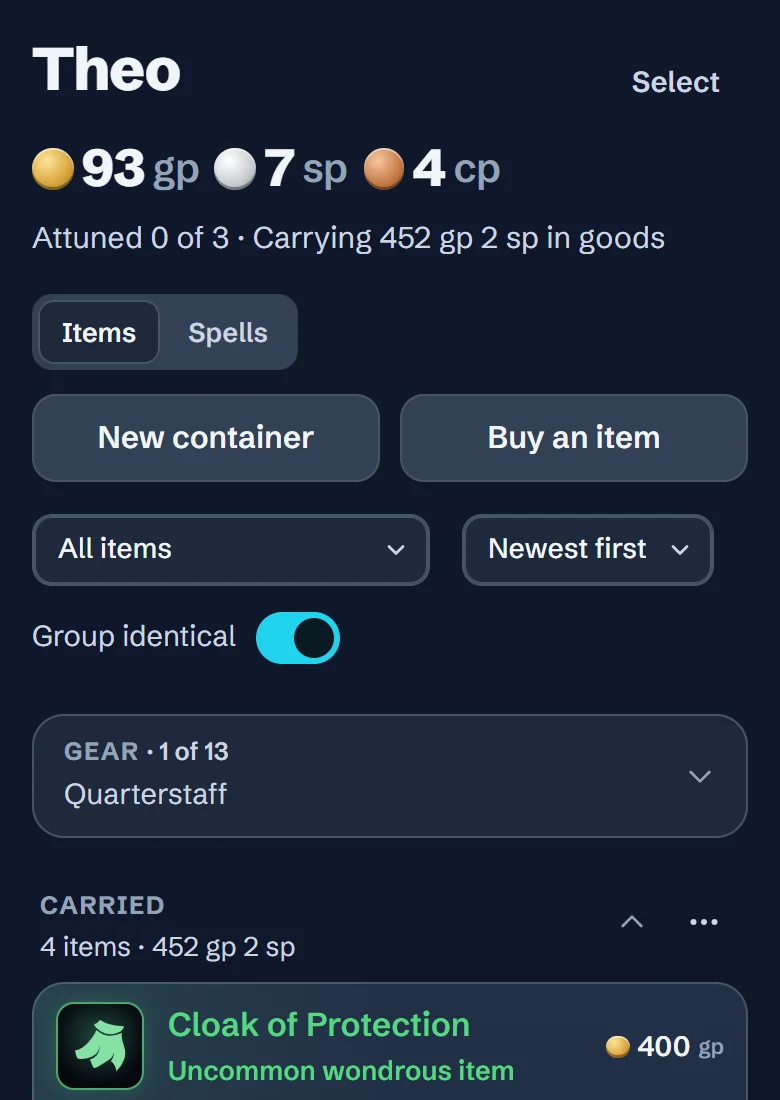
Hand out loot in Foundry, claim it in the app
The fight is over and the GM drops the hoard, a cloak, two potions of healing and a longsword, onto the Unprocessed Loot actor in Foundry, which the module can create for you. The same items appear in the campaign's Unprocessed Loot in the app, where the party settles who takes what. Assign the cloak to Theo there, from a phone or a laptop, and it lands in his character's inventory in Foundry without the GM dragging it over.
Nothing gets typed twice. The item keeps its name, value, weight and charges on both sides, and the app's ledger notes who took it.
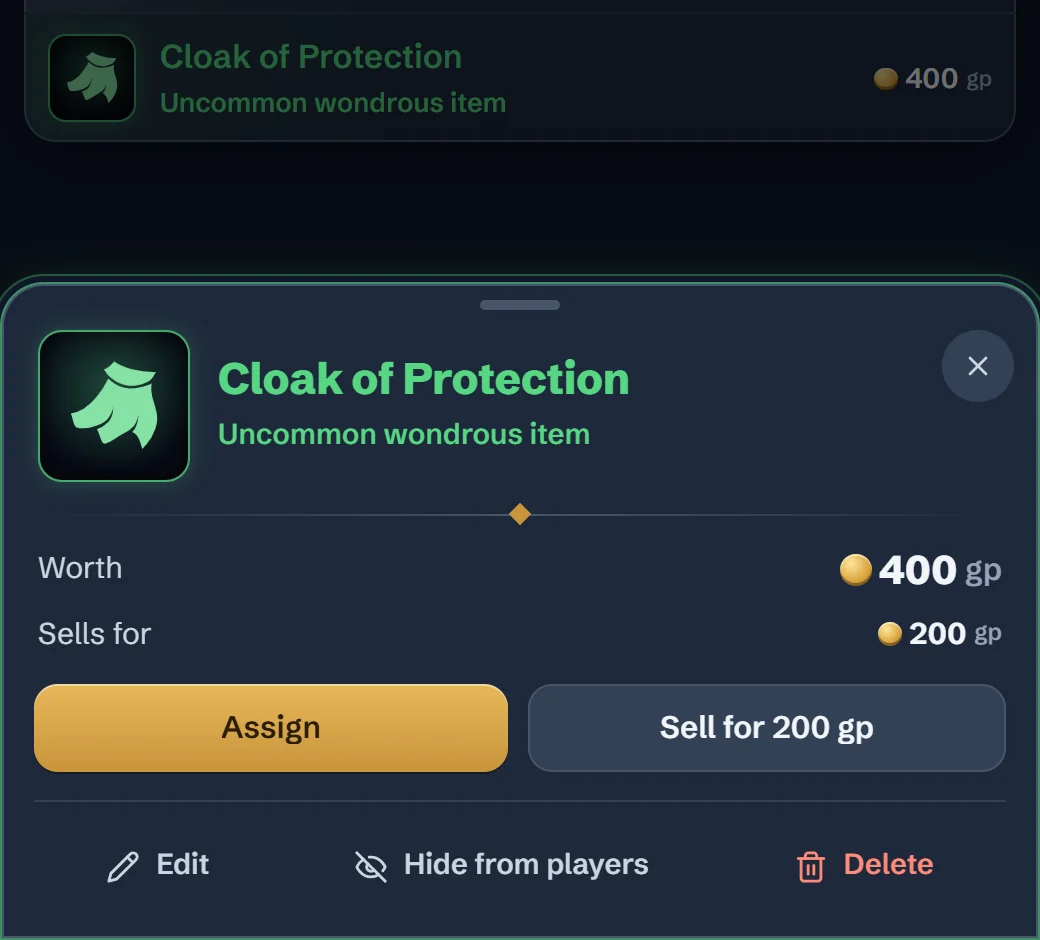
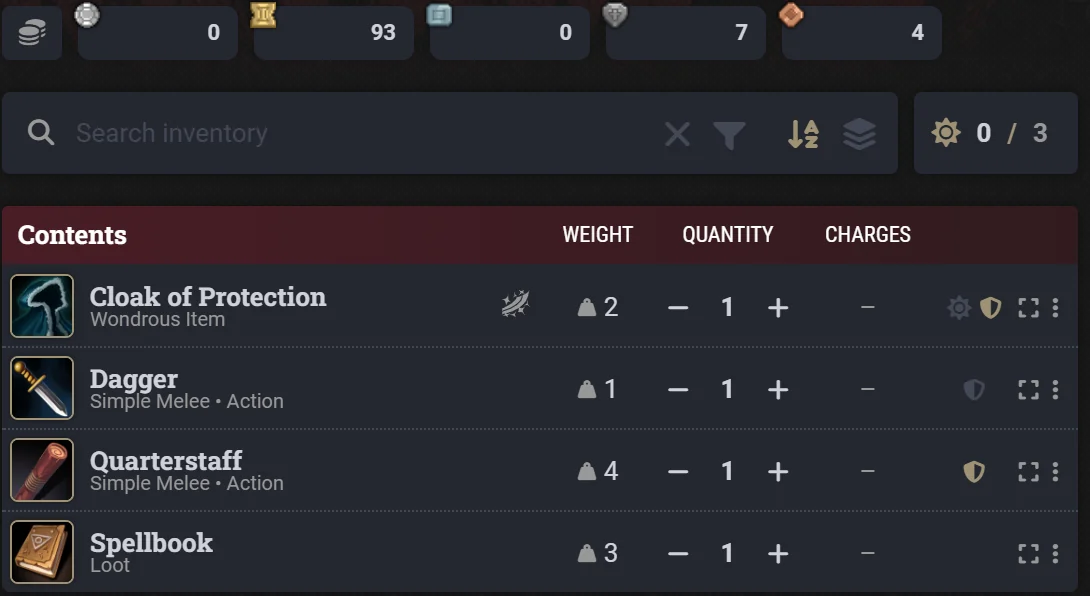
Between sessions, it is on their phones
Foundry only runs while the GM has the world open, so between sessions a player has no way to look at their character's gear. With the module, everything on their sheet is in the D20 Loot Tracker app too, on the web or in the Android app.
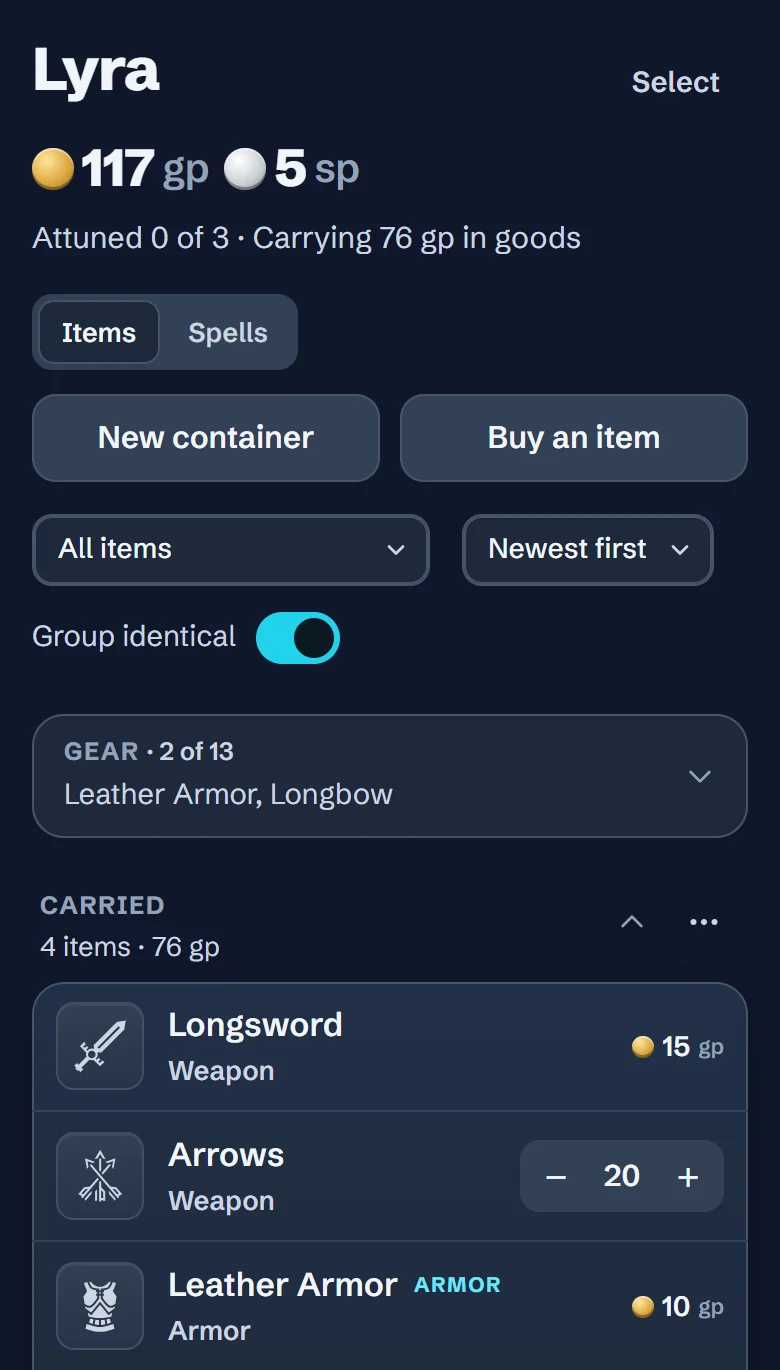
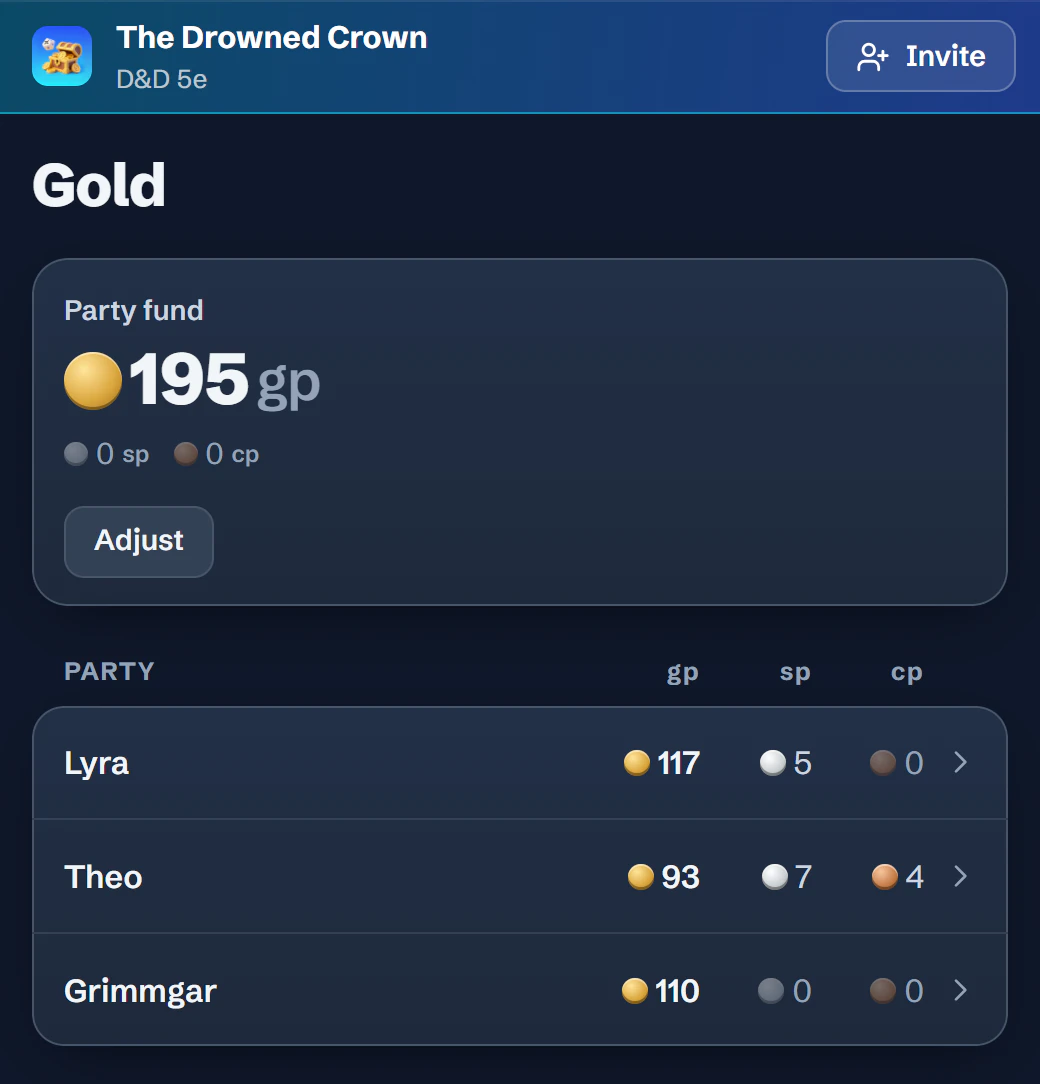
Lyra can check her longbow and her 117 gold on the bus, sell the longsword she no longer swings, and the sale is on her Foundry sheet the next time the GM opens the world.
Coins stay right on both sides
Sell the hoard or split the gold in the app and every purse moves at once, in Foundry too. The split makes change in silver and copper, the party fund takes its share if your table uses one, and the Party actor's coins follow the fund.
It works the other way as well: change the coins on a character sheet in Foundry and the purse in the app follows. Platinum and electrum on a sheet are converted to gold and silver, so a purse reads the same in both places.
The GM's secrets stay secret
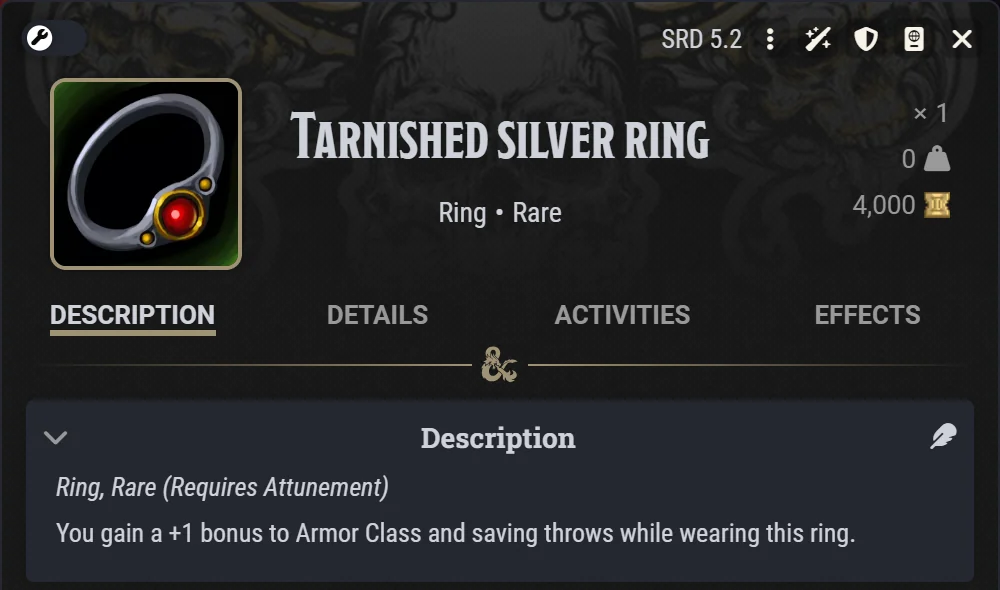
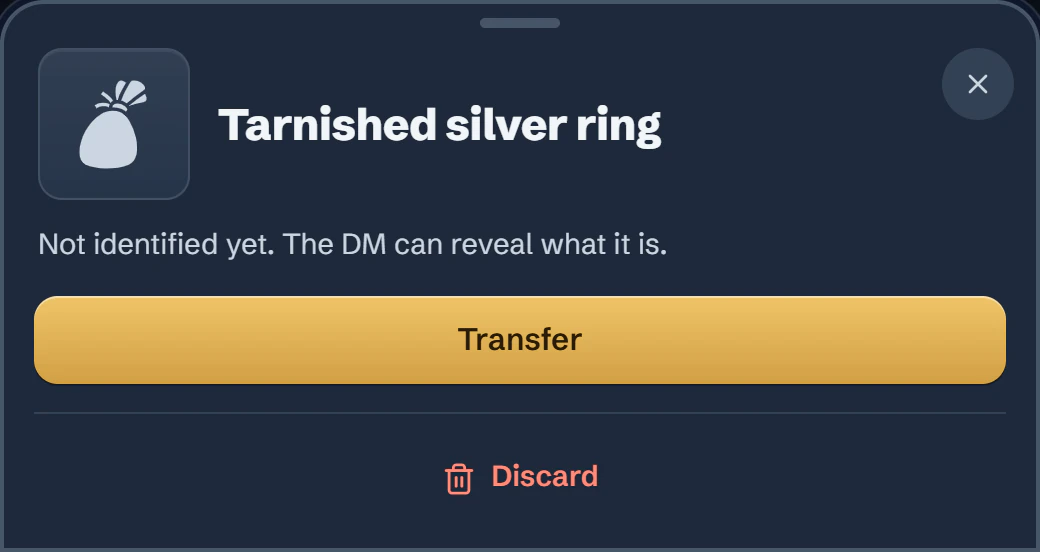
When the GM keeps an item unidentified in Foundry, it arrives in the app under its cover name, and that is all the players see: the tarnished silver ring stays a tarnished silver ring, with no value and no description, until the GM reveals it. Reveal it on either side and both update.
What gets used up in Foundry goes on the ledger
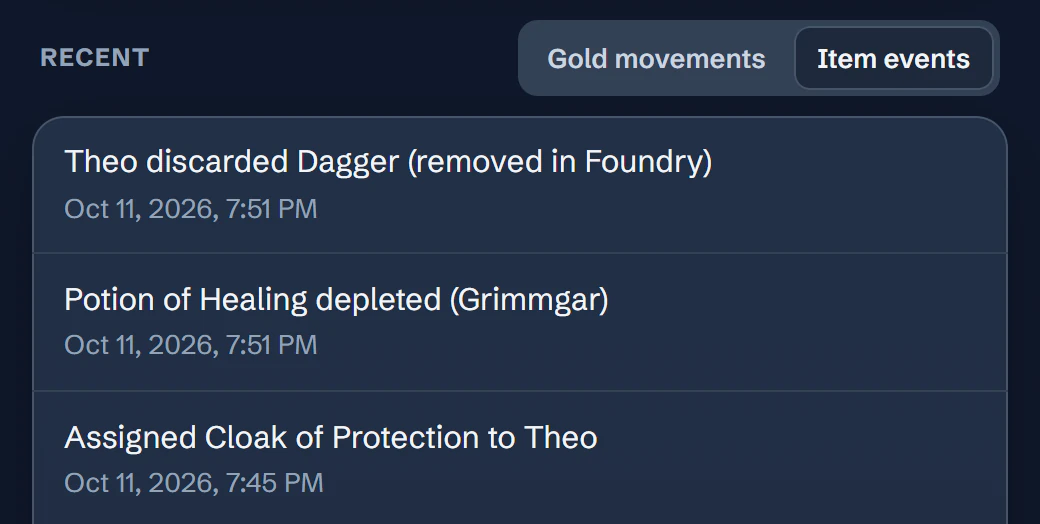
Play happens in Foundry, and the record keeps up. A potion drunk at the table is marked depleted in the app, and an item deleted from a sheet is marked discarded instead of vanishing. Arrows fired lower the quiver's count in the app as you play.
The ledger keeps every item used up or thrown away, with who and when, so the question of where the healing potions went has an answer.
Set it up once
You need a D20 Loot Tracker account that owns the campaign or is its DM. The setup guide walks through each step with pictures.
- 1
Install the module
In Foundry's module list, search for D20 Loot Tracker.
- 2
Connect the world
Click Connect in the module's settings and enter the code in the app.
- 3
Link the party
Match each character to their actor, then pick the Party and Unprocessed Loot actors.
- 4
Play
From then on, loot and coins stay in step whenever the GM has the world open.
D&D 5e and Pathfinder 2e on Foundry 14Pathfinder 1e on Foundry 13Only the GM installs the module
Questions people ask
- Do my players need anything?
- No module and no changes in Foundry. Players join the campaign from the GM's invite and sign in to D20 Loot Tracker with their own account, on the web or in the Android app. Only the GM installs the module and connects the world.
- What happens while the world is closed?
- Changes made in the app or in Discord wait, and the module applies them the next time the GM who connected the world opens it. Changes made in Foundry while that GM has the world open reach the app as they happen.
- What does not sync?
- Item descriptions after an item is created, spells, features and character stats, DM hoards, and actors you have not linked. Items inside Foundry containers sync as their owner's items.
- Which systems and versions does it support?
- D&D 5e (dnd5e 6.x) and Pathfinder 2e (pf2e 8.x) on Foundry 14, and Pathfinder 1e (pf1 11.11) on Foundry 13.
- Does it work with the Discord bot?
- Yes. Foundry, the web app, the Android app and the Discord bot all work on the same campaign, so loot the GM drops in Foundry can be claimed from Discord as well.